Fans and AC Together in 2026: Does Running Them Save Money or Waste Energy?
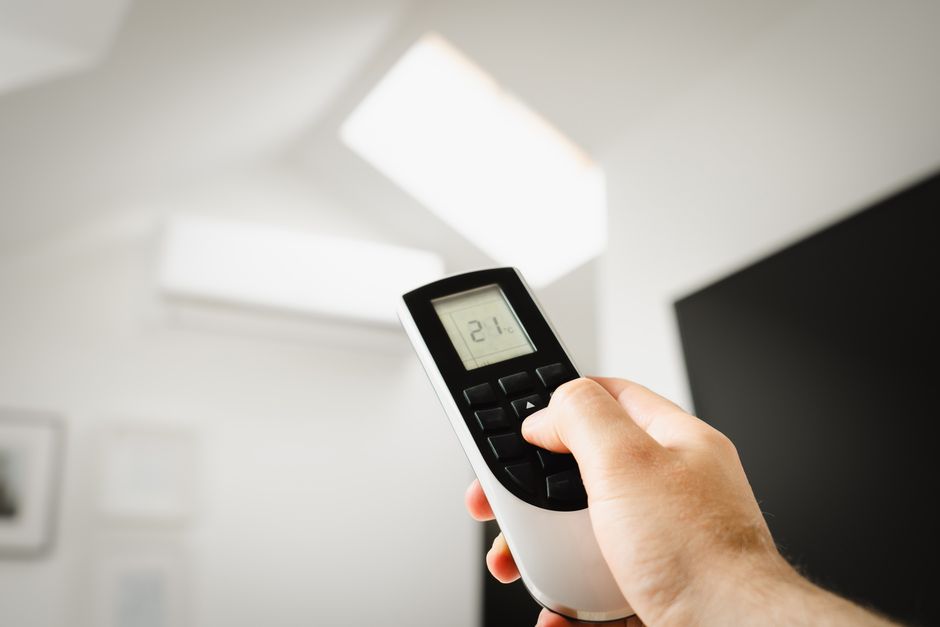
Photo by Jakub Zerdzicki / Pexels
The Core Question: Do Fans Really Save Money with AC?
The advice to "run your fan and raise your thermostat" has circulated in frugal communities for years, and it sounds logical on the surface. But with electricity rates climbing in 2026, it's worth examining whether this strategy actually delivers savings or just creates the illusion of comfort while your energy bill stays flat.
The short answer: Yes, running a fan with AC can save money—but only if you understand the mechanics and apply the strategy correctly. The key isn't that fans cool rooms cheaper than AC (they don't). Instead, fans help distribute conditioned air more effectively, allowing you to set your thermostat higher while maintaining comfort in specific zones.
How Fans and AC Actually Work Together
To understand the savings potential, you need to know what each appliance does:
- Air conditioning compressors consume massive amounts of electricity—typically 3,000 to 5,000 watts when running, making them one of the largest energy draws in your home
- Fans use only 25 to 75 watts, depending on the type and speed setting
When you raise your thermostat by just 4 degrees (from 72°F to 76°F) and use a fan, your AC compressor cycles on less frequently. That reduction in compressor runtime—measured in minutes per hour—is what creates savings. A fan running continuously at 50 watts costs far less than those extra compressor cycles.
The math becomes clearer when you consider that your AC compressor might run 15-20 minutes fewer per hour if the thermostat is 4 degrees higher. That's roughly 30,000 watt-minutes (or 500 watt-hours) saved, compared to a fan consuming only 1,200 watt-hours over the same 24-hour period.
The 2026 Energy Cost Reality
Current electricity rates in 2026 vary widely across the U.S., but the national average hovers around 14-16 cents per kilowatt-hour (kWh), with some regions paying 25+ cents. This makes the fan-plus-thermostat strategy more attractive than ever.
Let's use a realistic 2026 example:
| Scenario | Daily Energy Use | Monthly Cost (at $0.15/kWh) |
|---|---|---|
| AC only at 72°F | 45 kWh | $202.50 |
| AC at 76°F + ceiling fan | 38 kWh | $171.00 |
| Monthly savings | 7 kWh | $31.50 |
Over a three-month cooling season, that's nearly $95 in potential savings. For households in high-rate regions (California, Northeast), the savings could exceed $150 per season.
The strategy works best during shoulder months (spring and early fall) when outdoor temperatures are moderate. Once it hits 95°F+ outside, raising your thermostat to 76°F might feel uncomfortable, and the AC will run longer anyway—reducing the savings window.
Maximizing Your Fan Strategy in 2026
Not all fans are created equal, and placement matters significantly. Here's how to optimize:
Ceiling Fans vs. Portable Fans
Ceiling fans work best for distributing cool air throughout a room by creating circulation, while tower fans or box fans can direct air to specific zones. If you're trying to cool a bedroom without dropping the whole house temperature, a directional fan is more efficient.
Direction Matters
In cooling season, ceiling fan blades should rotate counterclockwise. This pushes air downward, creating a breeze effect that makes people feel cooler without actually lowering room temperature. The illusion of coolness is exactly what you want—it allows you to raise your thermostat.
Strategic Use
Run fans only in occupied rooms and turn them off when you leave. A fan running in an empty bedroom provides zero benefit and just adds to your energy bill. Programmable fan timers can help automate this if you frequently forget.
The Comfort-Savings Balance
This strategy has a ceiling to its effectiveness. You can't just keep raising your thermostat indefinitely and expect comfort. Most people find that 4-6 degrees of thermostat adjustment combined with fan use feels acceptable. Going beyond that—jumping to 78°F or 80°F—creates discomfort that no fan can fully offset, especially during hot afternoons.
Additionally, humidity plays a major role. AC units dehumidify air while cooling, but fans don't. In humid climates, raising your thermostat too high can make homes feel clammy and uncomfortable, even with a fan running. The Southeast and Gulf states may see reduced savings because the humidity component becomes limiting.
Key Takeaways
- Running a fan with AC does save money when you raise your thermostat by 4-6 degrees; the AC compressor runs less, offsetting the fan's modest energy draw
- Potential monthly savings in 2026 range from $25-50 depending on your local electricity rates and climate
- Fans work best in low to moderate heat; during extreme heat waves, thermostat adjustment becomes limited
- Strategic fan placement (occupied rooms only, directional use) maximizes efficiency without wasting energy
- The strategy is most effective during shoulder seasons when outdoor temperatures are mild
Frequently Asked Questions
Can I run my fan and keep the AC at 72°F for even more cooling?
Technically yes, but this defeats the purpose. You'd be paying for both the full AC load and fan electricity simultaneously, resulting in higher energy bills. The savings only materialize when you use the fan as a replacement strategy, not an addition to maximum cooling.
Should I run ceiling fans in winter?
Most ceiling fans have a winter mode (clockwise rotation) that pushes warm air downward from the ceiling. This can reduce heating costs by helping circulate warm air, though the savings are typically smaller than summer cooling savings. Many people simply turn off ceiling fans entirely during winter to avoid unnecessary energy draw.
How much does an efficient fan cost to run in 2026?
A typical ceiling fan uses 50-75 watts on medium speed. At 2026 rates of $0.15 per kWh, running it continuously costs roughly $0.18-0.27 per day. A portable fan might cost $0.12-0.18 daily. These costs are negligible compared to the $3-5+ daily cost of running an AC compressor frequently.